
Unlocking the Enigma of the Temple of Edfu: A Glimpse into Egypt’s Past
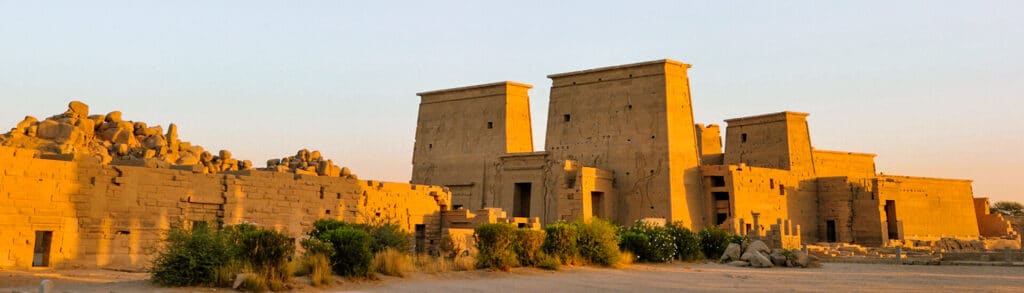
On the west bank of the Nile, in the city of Edfu, stands one of the most magnificent and best-preserved temples in all of Egypt.
The Temple of Edfu, also known as the Temple of Horus, is a masterpiece of ancient architecture. Unlike many other temples that were built and rebuilt over thousands of years, Edfu was constructed during a single period. This makes it unique. It gives us a complete picture of what an ancient Egyptian temple looked like and how it functioned.
In this guide, we will take you inside this remarkable monument. You will learn about its history, its gods, its daily rituals, and its stunning design. Whether you are planning a Nile cruise or simply love history, the story of Edfu will captivate you.
Where Is the Temple of Edfu?
The Temple of Edfu is located in the city of Edfu, about 100 kilometers (60 miles) south of Luxor. It sits on the west bank of the Nile River.
Edfu was an important city in ancient times. It was the capital of the second nome (province) of Upper Egypt. The city was known as Behdet in ancient times, and it was a center for the worship of Horus, the falcon-headed god.
Today, Edfu is a modern Egyptian city. But its ancient temple draws visitors from all over the world. Most Nile cruises stop here, giving passengers a chance to explore this architectural gem.
A Brief History of the Temple
The Ptolemaic Period
The Temple of Edfu is different from most other Egyptian temples. It was not built by the great pharaohs of the Old, Middle, or New Kingdoms. Instead, it was built during the Ptolemaic period, a time when Egypt was ruled by a Greek dynasty.
Construction began in 237 BC under King Ptolemy III Euergetes. It was completed nearly 200 years later, in 57 BC, under Ptolemy XII Auletes—the father of the famous Cleopatra.
This long construction period is unusual. But because the work was continuous, the temple has a unified design. There are no awkward additions or mismatched styles. It is a perfect example of a complete Egyptian temple.
Built on an Older Site
The Ptolemaic temple was not the first on this spot. Archaeologists have found evidence of an older temple built by Pharaoh Thutmose III of the 18th Dynasty (around 1450 BC). But that temple was small and eventually fell into ruin.
The Ptolemies chose this location because of its ancient connection to Horus. They wanted to honor the god and show that they, as Greek rulers, respected Egyptian traditions.
Why It Survived
After Christianity became the official religion of the Roman Empire, many Egyptian temples were closed, vandalized, or converted into churches. Edfu was different.
Over the centuries, the temple was gradually buried by desert sand. By the time of the Arab conquest in the 7th century AD, only the tops of the pylons were visible. The sand protected the temple from destruction.
When French scholar Jean-François Champollion visited in the early 1800s, much of the temple was still buried. Excavations in the 19th and 20th centuries revealed the monument in all its glory. Today, it is the best-preserved temple in Egypt.
Who Was Horus?
The Temple of Edfu is dedicated to Horus, one of the most important gods in the Egyptian pantheon.
The Story of Horus
Horus was the son of Osiris and Isis. According to myth, his father Osiris was murdered by his jealous brother, Seth. When Horus grew up, he fought Seth to avenge his father and claim the throne of Egypt.
The battle between Horus and Seth was long and brutal. Horus lost an eye, but he eventually won. His eye was restored by the god Thoth, becoming the famous Eye of Horus, a symbol of protection and healing.
Horus the King
Because Horus defeated Seth and inherited the throne, he became associated with kingship. Every pharaoh was considered the “Living Horus” on earth. When a pharaoh died, he became Osiris, and the new pharaoh became Horus.
This connection between Horus and the king made temples dedicated to him especially important. The pharaoh’s authority came from Horus, and by building and maintaining his temple, the king showed his devotion and earned the god’s favor.
Horus at Edfu
At Edfu, Horus was worshipped in a specific form: Horus of Behdet (the ancient name of Edfu). He was shown as a falcon or as a man with a falcon’s head, wearing the double crown of Upper and Lower Egypt.
His wife was Hathor, the goddess of love and music, whose main temple was at Dendera. Each year, the statue of Hathor was brought from Dendera to Edfu to visit Horus in a festival known as the “Feast of the Beautiful Meeting.”
Entering the Temple: The Great Pylon
The first thing you see when you approach the Temple of Edfu is its massive pylon. A pylon is a monumental gateway, and Edfu’s is one of the largest and best-preserved in Egypt.
Size and Design
The pylon stands 36 meters (118 feet) tall and is made of sandstone. It has two towers, each with a large recess where wooden flagpoles once stood. Colorful banners would have flown from these poles, marking the temple as a sacred space.
The Reliefs
The pylon is covered with huge reliefs showing Ptolemy XII smiting his enemies. The king is shown holding a group of captives by the hair, raising a mace to strike them. This scene was not meant to show a real event. It was a symbolic act, demonstrating the king’s power and his role as the defender of order (ma’at) against chaos.
The god Horus watches over the king, holding his hand and granting him victory. The message is clear: the king rules with the god’s approval, and his enemies will be destroyed.
The Falcon Statues
In front of the pylon, two magnificent granite statues of Horus as a falcon stand guard. They are carved from black granite and are in excellent condition. These statues set the tone for the entire temple: you are entering the domain of the falcon god.
Inside the Temple: The Courtyard
Passing through the pylon, you enter a large open courtyard. This area was accessible to the general public. Here, people could gather for festivals and bring offerings to the god.
The Colonnade
The courtyard is surrounded on three sides by a colonnade—a row of 32 columns. The columns are topped with elaborate capitals, some shaped like palm leaves, others like papyrus plants. The walls behind the columns are covered with reliefs.
The Festival Scenes
The reliefs in the courtyard show the Feast of the Beautiful Meeting, the annual festival when Hathor came from Dendera to visit Horus. You can see the sacred boat of Hathor being carried in procession, with priests and musicians celebrating.
These scenes give us a rare glimpse into the religious festivals of ancient Egypt. They show music, dancing, and offerings—a time when the temple came alive with joy.
The Hypostyle Hall
Beyond the courtyard is the hypostyle hall, a large room with a roof supported by 18 columns. This hall was more restricted than the courtyard. Only priests and high officials could enter.
The Columns
The columns in the hypostyle hall are massive, but they are lower than those in the courtyard. This creates a sense of mystery and darkness. The space between the columns and the roof is filled with stone screens, blocking most of the light.
The Ceiling
The ceiling of the hypostyle hall is one of the most beautiful parts of the temple. It is painted dark blue and covered with gold stars, representing the night sky. Some parts show astronomical scenes, including the constellations and the planets.
The Egyptians believed that the temple was a model of the universe. The floor represented the earth, the columns represented the plants that grew from the primordial swamp, and the ceiling represented the sky.
The Wall Reliefs
The walls of the hypostyle hall show the king making offerings to Horus and other gods. These offerings include food, incense, and symbolic objects like the ma’at feather, representing truth and order.
By performing these rituals in the reliefs, the king ensured that the gods would continue to protect Egypt. Even when the temple was empty, the stone images kept the magic working.
The Sanctuary: The Holy of Holies
At the very heart of the temple is the sanctuary, also called the Holy of Holies. This was the most sacred part of the temple, where the statue of the god lived.
The Naos
In the center of the sanctuary stands a granite naos—a shrine that once held the golden statue of Horus. The naos is made of a single block of granite and is beautifully carved. It is one of the finest examples of Egyptian stonework.
The statue of Horus was not a work of art for public display. It was the living image of the god. Priests would wash it, dress it, and offer it food twice a day. Only the highest-ranking priests were allowed to enter this room.
The Surrounding Chapels
Around the sanctuary are several smaller chapels dedicated to other gods. These include:
- Osiris, the father of Horus
- Isis, the mother of Horus
- Khonsu, the moon god
- Ptah, the creator god
Each chapel had its own rituals and its own priests. Together, they formed a community of gods, just as the king and his court formed a community of humans.
The Nilometer
One of the most interesting features of the Temple of Edfu is the nilometer.
A nilometer was a structure used to measure the height of the Nile flood. The annual flood was essential for Egyptian agriculture. If the flood was too low, there would be famine. If it was too high, villages would be destroyed.
The nilometer at Edfu is a deep well connected to the river. Markings on the wall show the water level. Priests would monitor these levels and predict the coming harvest.
This shows that the temple was not just a religious center. It was also a place of science and administration. The gods controlled the flood, but the priests watched the water.
The Sacred Enclosure
The Temple of Edfu was surrounded by a massive mudbrick wall. This wall enclosed not just the temple, but also workshops, storehouses, priests’ houses, and a sacred lake.
The Sacred Lake
The sacred lake was used for purification rituals. Priests would bathe here before entering the temple. The water also represented the primordial waters from which life first emerged.
Today, the sacred lake at Edfu is dry, but you can still see its outline.
The Mammisi
Near the temple is a smaller building called the Mammisi, or “Birth House.” This structure celebrated the divine birth of Horus. The reliefs show the god’s mother, Isis, giving birth to him in the marshes.
The Mammisi was an important part of the temple complex. It reminded visitors that Horus was not just a god—he was a being with a history, a family, and a miraculous birth.
The Inscriptions: A Library in Stone
One of the most remarkable things about the Temple of Edfu is the sheer amount of text carved on its walls.
Religious Texts
The walls are covered with religious texts describing the temple’s rituals, festivals, and mythology. These texts are not just decoration. They are a complete record of the temple’s purpose.
Scholars have studied these texts for decades. They have learned how the temple was built, how the priests performed their duties, and what the Egyptians believed about the gods.
The Building Inscription
One of the most important texts is the building inscription, found on the outer walls. It describes the construction of the temple in detail. It names the kings who built it, the materials used, and the rituals performed at the foundation ceremony.
This inscription is invaluable to historians. It tells us exactly when the temple was built and by whom.
The Geographical Lists
Another set of texts lists the nomes (provinces) of Egypt and their offerings to Horus. These lists show how the temple was connected to the entire country. Every part of Egypt contributed to the god’s worship.
Daily Life at the Temple
What was it like to live and work at the Temple of Edfu?
The Priests
The temple was run by a large staff of priests. The high priest was the most important. He was the only one allowed to enter the sanctuary and see the god’s statue.
Below him were:
- Second priests, who assisted in rituals
- Lector priests, who recited the sacred texts
- Hour priests, who kept track of time and the stars
- Purification priests, who prepared offerings and cleaned the temple
Priests were not monks. They were married, had families, and lived normal lives when not on duty. They served in the temple in shifts, usually for one month out of three.
The Workers
The temple also employed many workers:
- Scribes, who kept records
- Artisans, who maintained the carvings and paintings
- Farmers, who grew food for the offerings
- Guards, who protected the temple at night
The temple was a small city, with hundreds of people depending on it for their livelihood.
The Offerings
Every day, food and drink were offered to the gods. These offerings included:
- Bread and cakes
- Beer and wine
- Roasted meat
- Fruits and vegetables
- Incense and perfumes
After the god had “eaten” the spiritual essence of the food, the physical food was given to the priests. This was a major source of their income.
The Rediscovery of Edfu
For centuries, the Temple of Edfu lay buried under sand.
Early Visitors
In the 18th century, European travelers began to visit Egypt. They described seeing the tops of the pylons sticking out of the sand, but they could not enter.
The French Expedition
When Napoleon invaded Egypt in 1798, he brought scientists and artists with him. They made the first detailed drawings of the temple. These drawings were published in the massive book series Description de l’Égypte.
Excavation
In the 19th century, Auguste Mariette, the founder of the Egyptian Antiquities Service, began clearing the sand from the temple. The work continued for decades.
Today, the temple is completely clear. You can walk through every part of it, from the pylon to the sanctuary.
The Temple of Edfu Today
Visiting Edfu
Most visitors reach Edfu as part of a Nile cruise. The temple is a standard stop on almost every itinerary between Luxor and Aswan.
The dock is a short walk from the temple. Horse-drawn carriages (called “calèches”) are available for those who do not want to walk.
What to See
Plan to spend at least two hours at the temple. Key highlights include:
- The great pylon with its smiting scenes
- The black granite falcon statues
- The open courtyard and its festival reliefs
- The hypostyle hall with its starry ceiling
- The sanctuary and the granite naos
- The nilometer
- The Mammisi (birth house)
Best Time to Visit
The temple is open from early morning until late afternoon. Early morning is best, as the light is beautiful and the crowds are smaller.
Edfu can be very hot in summer. If you visit between May and September, bring water and a hat.
Why Edfu Matters
The Temple of Edfu is more than just a tourist attraction. It is a time capsule.
Because it was built in a single period, it gives us a complete picture of Egyptian temple design. Because it was buried for centuries, its carvings are remarkably well preserved. Because its walls are covered with texts, we know more about Edfu than almost any other temple.
For anyone interested in ancient Egypt, Edfu is essential. It shows us what the Egyptians believed, how they worshipped, and how they built monuments that would last forever.
When was the Temple of Edfu built?
Construction began on August 23, 237 BC, and was completed in 57 BC. It took 180 years to build.
Which god is the Temple of Edfu dedicated to?
The temple is dedicated to Horus, the falcon-headed god of the sky, son of Osiris and Isis.
Why is the Temple of Edfu so well preserved?
It was buried under 12 meters of sand and silt for centuries, which protected it from damage. It was excavated starting in 1860.
What is the Sacred Drama at Edfu?
The Sacred Drama is a series of inscriptions on the temple walls that tell the story of the conflict between Horus and Seth. It was likely reenacted annually.
Conclusion
The Temple of Edfu is a masterpiece of ancient engineering and art. It stands as a testament to the devotion of the Ptolemaic kings, the skill of Egyptian builders, and the power of the god Horus.
Walking through its halls, you can almost hear the echoes of priests chanting, smell the incense burning, and feel the presence of the divine. It is a place where the past comes alive.
Check Our Top Nile Cruise Trips:-
Book your Nile cruise with Top Nile Cruises and experience the magic of Edfu for yourself.