
Tomb of Tutankhamun: The Discovery That Changed Egypt
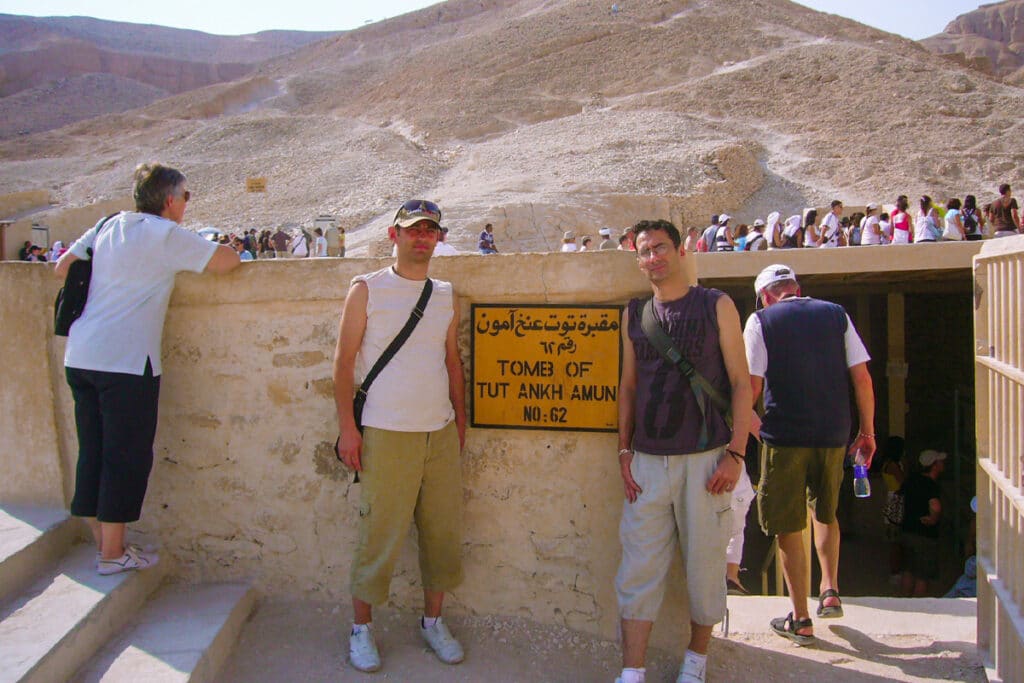
The tomb of Tutankhamun, also known as King Tut’s Tomb, is the most famous archaeological discovery ever made in Egypt. Hidden for over 3,000 years, it was found almost by accident in 1922. Inside, Howard Carter uncovered rooms filled with gold, jewelry, statues, and the mummy of a young pharaoh.
Today, the tomb is one of the most visited sites in the Valley of the Kings,. It offers a rare and intimate look at how Egyptian royalty prepared for the afterlife.
In this guide, we will tell the full story of the discovery, explain what was found inside, and explore why Tutankhamun still captures the world’s imagination.
Who Was King Tutankhamun?
Tutankhamun was a pharaoh of the 18th Dynasty. He ruled Egypt from around 1332 to 1323 BC. He was only about nine years old when he became king and died around age 18 or 19.
His father was likely the controversial pharaoh Akhenaten, who tried to change Egypt’s religion to worship a single god, the Aten. After Akhenaten’s death, Tutankhamun restored the old gods and moved the capital back to Thebes (modern Luxor).
Because he ruled for such a short time, Tutankhamun was not considered a major king. His name was left off later king lists. But today, he is the most famous pharaoh in the world—all because of his tomb.
Where Is Tomb of Tutankhamun Located?
The tomb is located in the Valley of the Kings, on the west bank of the Nile near Luxor. This valley was the royal burial ground for pharaohs of the New Kingdom.
Tutankhamun’s tomb is numbered KV62. It is smaller than other royal tombs in the valley. Scholars believe this is because Tutankhamun died suddenly, and his tomb was not finished. He was likely buried in a tomb meant for someone else.
The Discovery of the Tomb
The Search for Lost Tombs
By the early 1900s, archaeologists believed that all the tombs in the Valley of the Kings had been found. Most had been looted in ancient times. But one British archaeologist, Howard Carter, disagreed.
Carter was convinced that the tomb of a little-known pharaoh named Tutankhamun was still hidden. He was funded by Lord Carnarvon, an English nobleman who loved Egyptology.
For five years, Carter searched the valley. He found nothing. Lord Carnarvon was ready to give up.
November 4, 1922 – The Day Everything Changed
On November 4, 1922, a water boy on Carter’s team stumbled on a stone step buried in the sand. Carter ordered his workers to dig. They found a staircase leading down to a sealed door.
Carter later wrote that his hands trembled as he made a small hole in the door. He held a candle inside. When asked if he could see anything, he spoke the famous words:
“Yes, wonderful things.”
Behind the door was a corridor filled with rubble. Beyond that was another sealed door. And beyond that lay the antechamber—a room packed with treasures.
It was the most intact royal tomb ever found in Egypt.
The Curse of the Pharaohs: Myth or Mystery?
Shortly after the tomb was opened, Lord Carnarvon died from an infected mosquito bite. Newspapers quickly spread rumors of a “curse.” Some claimed an inscription in the tomb read:
“Death will come on swift wings to those who disturb the king.”
No such inscription was ever found.
Why the Curse Became Famous
The timing was perfect. Carnarvon died just weeks after the tomb was opened. At the same moment of his death, all the lights in Cairo went out—or so the story goes.
Since then, many people connected to the tomb have died. Scientists say this is coincidence. The tomb was sealed for centuries, but there is no evidence of poison or supernatural forces.
Still, the Curse of the Pharaohs remains one of the most famous legends in archaeology.
The Excavation: A Decade of Work
After opening the antechamber, Carter faced an enormous challenge. The room was filled with hundreds of objects: chariots, beds, thrones, statues, and boxes. Every item had to be photographed, catalogued, and preserved before it could be moved.
It took Carter and his team 10 years to clear the entire tomb.
The Burial Chamber
Beyond the antechamber was the burial chamber. This room held the most important discovery of all: the sarcophagus of Tutankhamun.
The sarcophagus was made of quartzite and covered in red granite. Inside were three nested coffins, one inside the other. The last coffin was made of solid gold, weighing over 110 kilograms.
Inside that coffin lay the mummy of the young king, covered in jewelry and wearing the famous gold funeral mask.
The Treasures of Tutankhamun’s Tomb
The tomb contained more than 5,000 objects. Below are the most important categories.
The Golden Funeral Mask
This is the most iconic artifact from ancient Egypt. The mask is made of 11 kilograms of solid gold, inlaid with lapis lazuli, quartz, and obsidian. It shows the king with a striped headdress, a false beard, and a vulture and cobra on his forehead.
The mask is now in the Grand Egyptian Museum in Giza.
The Sarcophagus and Coffins
- Outer coffin: Wood covered in gold leaf, showing the king as Osiris.
- Middle coffin: Inlaid glass and precious stones.
- Inner coffin: Solid gold, weighing 110.4 kilograms.
The Canopic Shrine and Jars
Tutankhamun’s internal organs—liver, lungs, stomach, and intestines—were removed during mummification and stored in four miniature gold coffins. These were placed inside a beautiful alabaster chest, surrounded by a gilded wooden shrine guarded by goddesses.
The Throne of Tutankhamun
A wooden throne covered in gold and silver. The back shows the king and his wife, Ankhesenamun, in a tender domestic scene. She is touching his shoulder and offering him perfume.
Jewelry and Amulets
Hundreds of pieces of jewelry were found on the mummy itself: bracelets, necklaces, rings, and pendants. Many are made of gold and semi-precious stones like carnelian and turquoise.
Chariots
Six dismantled chariots were found in the antechamber. They were covered in gold and decorated with scenes of the king hunting and in battle.
Food and Wine
Jars of preserved food, wine, and oil were placed in the tomb to sustain the king in the afterlife. Chemical analysis has revealed the types of wine and the vintage years.
Walking Sticks and Staves
Over 130 walking sticks and staves were found. Many show signs of use. Some scholars believe Tutankhamun may have walked with a cane due to a bone disorder.
Why Is Tutankhamun’s Tomb So Important?
1. It Was Almost Completely Untouched
Most royal tombs were robbed in antiquity. Tutankhamun’s tomb was robbed at least twice, but the robbers took only small, easy-to-carry items. The priests resealed the tomb, and it was eventually buried by flood debris and forgotten.
Because it remained hidden, the tomb gives us a complete picture of a royal burial.
2. It Transformed Our Knowledge of Egyptian Art
The tomb contained objects from different periods of Tutankhamun’s life. Some were made for him; others were inherited from his predecessors. This has helped art historians understand the development of Egyptian craftsmanship.
3. It Made Tutankhamun a Global Icon
Before 1922, Tutankhamun was unknown outside academic circles. Today, his name is recognized worldwide. His treasures have been exhibited in museums across the globe, seen by hundreds of millions of people.
4. It Changed How Archaeology Is Done
Carter’s methods were not perfect by today’s standards, but his careful recording set a new precedent. His 10-year excavation showed the world that archaeology is not about treasure hunting—it is about preserving knowledge.
Where Are the Treasures Today?
For decades, most of Tutankhamun’s treasures were displayed at the Egyptian Museum in Cairo’s Tahrir Square. The golden mask was the museum’s centerpiece.
In 2021, the mask and many other objects were moved to the new Grand Egyptian Museum (GEM), located near the Giza Pyramids. The GEM is one of the largest archaeological museums in the world and will display the full Tutankhamun collection together for the first time.
The tomb itself remains in the Valley of the Kings. Visitors can enter the small, undecorated burial chamber. The mummy of Tutankhamun was returned to the tomb in 2007 and now lies in a climate-controlled case.
Visiting Tutankhamun’s Tomb
How to Get There
The Valley of the Kings is on the west bank of Luxor. Most visitors reach it by taxi, tour bus, or as part of a Nile cruise itinerary.
What to Expect
- The tomb is small. The walls are not as decorated as other tombs in the valley.
- Photography is not allowed inside.
- The mummy is visible in a glass case.
Best Time to Visit
Go early in the morning (6:00–8:00 AM) to avoid crowds and heat. The Valley of the Kings is very hot in summer.
Combine With Other Sites
A full west bank tour should also include:
- Hatshepsut’s Temple
- Colossi of Memnon
- Medinet Habu
- Deir el-Medina
Frequently Asked Questions
When was Tutankhamun’s tomb discovered?
The tomb was discovered on November 4, 1922 by British archaeologist Howard Carter.
Where is Tutankhamun’s tomb located?
It is located in the Valley of the Kings, near Luxor, Egypt. The tomb number is KV62.
Can you visit Tutankhamun’s tomb?
Yes. The tomb is open to visitors. The mummy of Tutankhamun is displayed inside a climate-controlled glass case.
Is the curse of the pharaohs real?
No. There is no scientific evidence for a curse. It was a myth created by newspapers after Lord Carnarvon’s death.
Conclusion
Tutankhamun’s Tomb is more than a collection of gold and artifacts. It is a bridge to the past. It shows us the face of a young king, the skill of ancient artists, and the deep faith of a civilization that believed death was not the end—but a journey.
For anyone visiting Egypt, the Valley of the Kings is unforgettable. And among all its tombs, KV62 remains the most legendary.
Check Our Top Nile Cruise Trips:-
Want to read more. Check Wikipedia article
Plan your visit with Top Nile Cruises and step into the world of King Tut.