
The Nubian Villages in Aswan, Egypt: Unveiling a Cultural Marvel
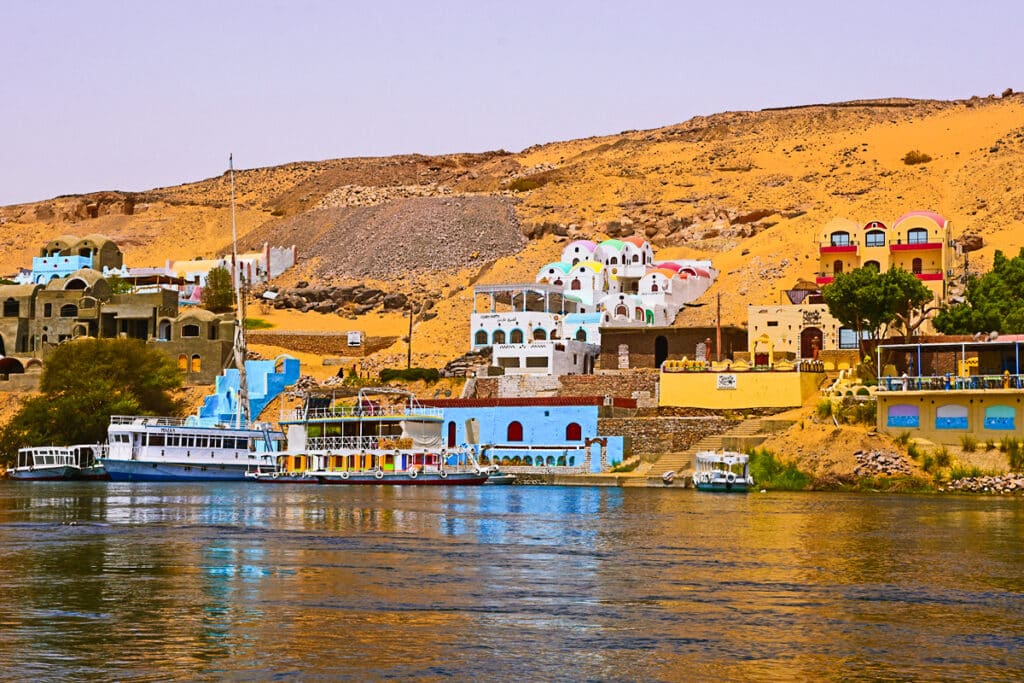
The Nile River flows gently through Aswan, and along its banks, painted in bright blues, yellows, and reds, lie the Nubian Villages. These are not just places on a map. They are living communities where an ancient culture thrives.
The Nubian people have lived in southern Egypt and northern Sudan for thousands of years. They have their own language, their own traditions, and a way of life that is deeply connected to the river. Today, their villages are among the most colorful and welcoming places you can visit in Egypt.
In this complete guide, we will take you inside the Nubian villages. You will learn about their history, their unique architecture, their food, their music, and how to visit respectfully. We will also show you the natural beauty surrounding Aswan and give you practical tips for an unforgettable experience.
Who Are the Nubian People?
The Nubians are one of the oldest civilizations in Africa. Their history goes back over 5,000 years. In ancient times, the land of Nubia was a rival to Egypt. The Nubians built their own kingdoms, pyramids, and temples. They traded with the Egyptians, fought them, and sometimes ruled them.
During the 20th century, the Nubian way of life changed forever. When the Aswan High Dam was built in the 1960s, Lake Nasser flooded a huge area of Nubian land. Thousands of Nubian families were forced to move. Their ancestral villages disappeared under the water.
But the Nubian people did not disappear. They rebuilt their villages north of the old flood zone. They kept their language, their customs, and their identity. Today, visiting a Nubian village means meeting a people who have survived and preserved their culture against great odds.
Where Are the Nubian Villages?
The main Nubian villages near Aswan are located on the west bank of the Nile, across from the city center. The most famous and most visited is Gharb Soheil, but there are several others.
To reach them, you take a short boat ride from Aswan’s east bank. The boat journey itself is part of the experience. As you cross the Nile, you leave the modern city behind and enter a different world.
Some villages can also be reached by road, but the boat is more scenic and more traditional.
The Architecture of Nubian Villages
Houses Made of Mud
The first thing you notice in a Nubian village is the houses. They are made of mud bricks—a mixture of Nile mud, straw, and water. This material has been used in Egypt for thousands of years. It is cheap, available, and perfect for the climate.
Mud bricks keep houses cool during the scorching day and warm during the cool desert nights.
Domes and Vaults
Many Nubian houses have dome-shaped roofs. These are not just decorative. Domes are structurally strong and help with ventilation. Hot air rises and escapes, pulling cooler air in from below.
The Colors of Nubia
Nubian houses are painted in bright colors. Blue is everywhere—the color of the Nile and the sky. Yellow represents the desert sand. Green stands for the few palm trees and crops. Red is for life and energy.
The walls are often decorated with geometric patterns, flowers, and symbols. Some designs are passed down through families for generations. Others are the creative expression of the people living there.
You will also see crocodiles. Real, dried crocodiles hang above doorways. In Nubian tradition, the crocodile is a protector. It guards the home from evil spirits. Do not worry—they are dead and harmless.
The Nubian Language
The Nubian people speak their own language, called Nobiin. It is completely different from Arabic. If you listen closely, it sounds soft and musical.
Many Nubians also speak Arabic and English, especially those who work with tourists. But they are proud of their language and happy to teach you a few words.
Try these:
- “Iwal” – Yes
- “Balan” – No
- “Masgid” – Thank you
- “Miso” – Hello
Saying a few words in Nubian will make the locals smile.
Daily Life in a Nubian Village
Life in the villages moves slowly. The river sets the rhythm. In the morning, fishermen take their small boats out. Women sweep the streets in front of their houses. Children run to school in colorful uniforms.
You will see men sitting in front of shops, drinking tea and talking. You will see women weaving baskets or making pottery. You will see cats sleeping in the sun and chickens scratching in the dirt.
This is not a museum. It is a real community. People live, work, and raise families here. Visiting is a privilege, and it is important to be respectful.
How to Visit a Nubian Village
By Boat
The most common way to visit is by felucca or motorboat from Aswan. The boat ride takes about 20 to 30 minutes. You will glide past granite rocks, green islands, and other small villages.
Your boat captain will drop you at a village landing. From there, you can walk or take a tuk-tuk into the village.
By Tour
Many visitors book a guided tour. A guide will take you to a village, introduce you to local families, and explain what you are seeing. This is the best way to learn about Nubian culture and avoid getting lost.
Independently
It is possible to visit on your own. Just hire a boat at the Aswan Corniche and tell the captain you want to go to “Gharb Soheil” or “the Nubian village.” Agree on a price before you go (usually 200–300 EGP for the round trip, including waiting time).
Once there, you can walk around freely. Shopkeepers will invite you into their shops. Families may invite you into their homes. Be friendly, but also be aware that some experiences (like tea or a tour of a house) come with an expectation of a small tip or purchase.
What to Do in a Nubian Village
Visit a Nubian Home
Some families open their homes to visitors. You can sit in their courtyard, drink tea, and learn about their lives. They will show you how they cook, how they decorate, and maybe even introduce you to the family crocodile (dried, on the wall).
This is not a performance. It is genuine hospitality. If you are invited in, accept with gratitude.
See the Crocodiles
As mentioned, dried crocodiles are a common sight. In some homes, you will see live baby crocodiles in tanks. The Nubians raise them and later sell them or release them. You can hold one (carefully) and take a photo.
Shop for Handicrafts
Nubian women are skilled at making baskets, pottery, and jewelry. Men often carve wood or make leather goods. Buying directly from the artisans means your money goes to the community, not to a middleman.
Look for:
- Handwoven baskets in bright colors
- Pottery bowls and plates with traditional patterns
- Silver and bead jewelry
- Hand-painted scarves
- Small crocodile figurines (made of wood or soapstone)
Get a Henna Tattoo
Henna is a natural dye used to paint temporary designs on skin. Nubian women are experts. You can sit in a shop or a home and have your hands or feet decorated. The design lasts about one to two weeks.
Ride a Camel
Some villages have camels waiting for tourists. A short ride along the riverbank or through the village is a fun way to see the area. Negotiate the price first (50–100 EGP for a short ride).
Drink Nubian Tea
Nubian tea is sweet, dark, and flavored with mint or spices. Drinking tea is a social ritual. If a shopkeeper offers you tea, accept. It is a sign of friendship. You do not have to buy anything, but buying a small item is a kind gesture.
Nubian Food
Nubian cuisine is simple, healthy, and full of flavor. If you visit a home or a local restaurant, you might try:
- Ful medames – Cooked fava beans with oil, lemon, and garlic
- Ta’meya – Egyptian falafel, made from fava beans
- Kisra – A thin, sourdough flatbread
- Molokhia – A green soup made from jute leaves, served with rice or bread
- Grilled fish – Fresh from the Nile
- Dates – Sweet and sticky, often served with tea
Many Nubians are happy to share their food with visitors. If you are invited to eat, consider it an honor.
Music and Dance
Music is at the heart of Nubian culture. The most famous Nubian musician was Mohammed Mounir, known as “The King.” His songs mix Nubian rhythms with modern sounds.
In the villages, you may hear:
- The oud – A pear-shaped string instrument
- The tar – A frame drum
- The simsimiyya – A traditional lyre
If you visit during a festival or celebration, you will see dancing. Nubian dance is energetic and joyful. Men and women dance separately, moving their hips and shoulders in rhythm.
Some restaurants and tour operators offer evening shows with music and dance. These are fun, but a spontaneous village celebration is even better.
Festivals and Celebrations
The Nubian calendar is full of festivals. Some are religious, some are seasonal, and some celebrate family events like weddings.
Important festivals:
- Soyat – A harvest festival with music, dancing, and feasting
- Ras Assana – Nubian New Year
- Weddings – Can last for days, with processions, music, and lots of food
If you happen to be in a village during a celebration, you will be welcomed. It is a chance to see Nubian culture at its most vibrant.
The Nubian Museum in Aswan
Before or after your village visit, take time to explore the Nubian Museum in Aswan. This world-class museum tells the story of Nubia from prehistoric times to the present.
Highlights include:
- Statues of Nubian kings
- Jewelry and pottery from ancient Nubia
- Models of Nubian houses
- Photographs of the old villages before they were flooded
- Artifacts saved during the UNESCO rescue campaign
The museum is beautifully designed, with gardens overlooking the Nile. It provides context for everything you see in the villages.
Nature and Scenery Around Aswan
The Nubian villages are surrounded by stunning natural beauty. The Nile here is wide and dotted with islands. The desert comes right to the water’s edge.
Elephantine Island
The largest island near Aswan, Elephantine Island has been inhabited for thousands of years. It was a strategic trading post and a center of worship for the god Khnum.
Today, the island has Nubian villages, ruins, and a small museum. You can walk through palm groves and see ancient nilometers (wells used to measure the Nile’s water level).
Kitchener’s Island (Aswan Botanical Garden)
This small island was given to Lord Kitchener in the 1890s. He turned it into a botanical garden, planting trees and plants from around the world.
Today, it is a peaceful escape. Walk along shaded paths, see giant bamboo and flowering trees, and enjoy views of the Nile from every side.
Philae Temple
Although not nature, Philae Temple is part of the Aswan landscape. It sits on an island and is surrounded by water. The temple was also moved during the dam construction.
Visit by boat, preferably in late afternoon when the light is golden and the crowds are thinner.
The Sahara Desert
From Aswan, you can arrange trips into the desert. Camel treks, 4×4 safaris, and sunset viewings are all possible. The desert here is not endless sand—it is rocky, with mountains and valleys.
Practical Tips for Visiting Nubian Villages
Best Time to Visit
- October to April: Cool and pleasant. Ideal for walking and spending time outside.
- May to September: Very hot. Visit early in the morning or late afternoon. Drink lots of water.
What to Wear
- Dress modestly. Cover your shoulders and knees.
- Women may want to carry a scarf for extra coverage.
- Comfortable shoes for walking on sandy paths.
- Sunglasses, hat, and sunscreen.
Cultural Etiquette
- Greet people. Say “Salam alaykum” when entering a shop or home.
- Ask before taking photos. Most people will say yes, but respect their privacy.
- Do not touch people without permission. This is especially important with women and children.
- Remove your shoes if entering a home.
- Accept tea. It is rude to refuse.
- Bargain politely. It is expected, but do it with a smile.
Money
- Bring small bills (Egyptian pounds). Many shops do not have change for large notes.
- Some places accept dollars or euros, but the exchange rate may not be good.
- Tipping (baksheesh) is customary. Tip your boat captain, guide, and anyone who offers you a service.
Safety
The Nubian villages are very safe. Crime is rare. However, use common sense:
- Keep your valuables close.
- Do not wander alone after dark.
- Listen to your guide’s advice.
How to Get to Aswan
By air:
- Daily flights from Cairo to Aswan International Airport
- Flight time: about 1.5 hours
By train:
- Sleeper trains from Cairo to Aswan
- Overnight journey, very comfortable
- Book in advance
By Nile cruise:
- Many visitors arrive in Aswan as part of a multi-day cruise from Luxor
- This is a relaxing way to see the Nile Valley
Frequently Asked Questions
How do I get to the Nubian villages in Aswan?
You can take a felucca or motorboat from Aswan’s east bank to the west bank villages. The boat ride takes about 20–30 minutes.
What is special about Nubian houses?
Nubian houses are made of mud bricks and painted in bright colors. They often have dome roofs and dried crocodiles above the door for protection.
Can I stay overnight in a Nubian village?
Yes. There are guesthouses and eco-lodges in some villages that offer an authentic Nubian experience. Book in advance.
Is it safe to visit the Nubian villages?
Yes. The villages are very safe and welcoming. Use common sense, dress modestly, and be respectful of local customs.
Conclusion
The Nubian villages of Aswan are not just a tourist attraction. They are a living culture, a community with deep roots and a bright spirit.
When you visit, you are not just seeing colorful houses and buying souvenirs. You are meeting people who have survived displacement, preserved their language, and kept their traditions alive. You are sharing tea with families who welcome strangers as friends. You are walking through streets where every color has meaning and every crocodile guards a home.
Take your time. Talk to people. Listen to the music. Taste the food. Let the rhythm of the Nile slow you down.
The Nubian villages will stay with you long after you leave.
Check Our Top Nile Cruise Trips:-
Plan your Nubian village visit with Top Nile Cruises and discover the heart of Egyptian hospitality.