
Luxor Temple: A Guide to Egypt’s Ancient Jewel on the Nile
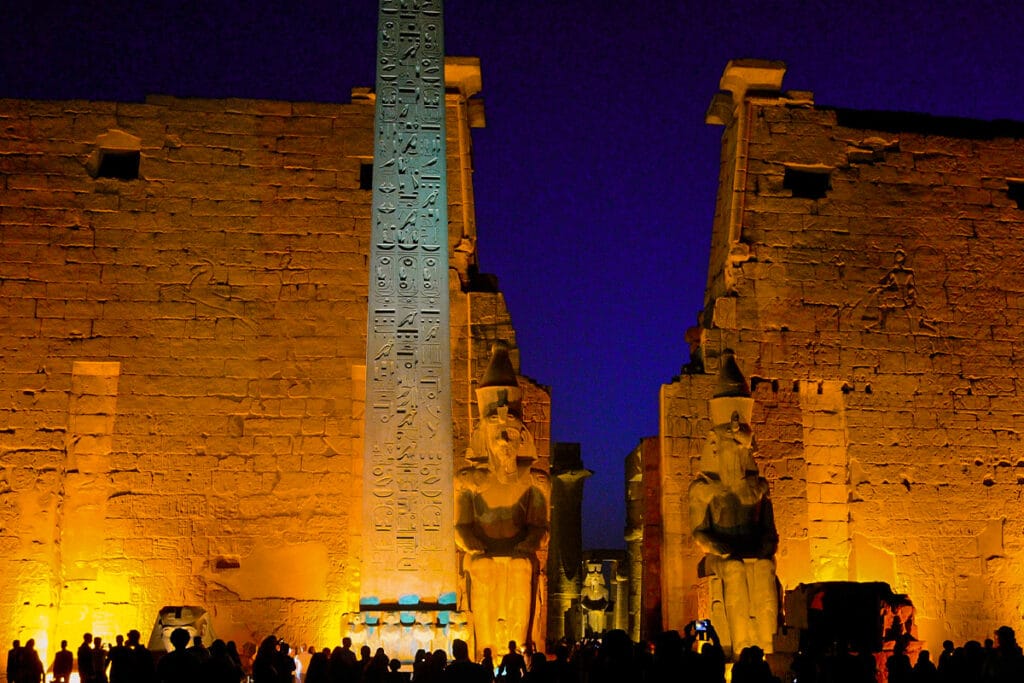
In the heart of modern Luxor, right on the banks of the Nile, stands one of Egypt’s most elegant and accessible ancient monuments: Luxor Temple.
Unlike the massive, sprawling complex of Karnak to the north, or the hidden tombs of the Valley of the Kings across the river, Luxor Temple feels intimate. It is right in the city. You can walk to it from your hotel. At night, it is beautifully lit, and its golden stone glows against the dark sky.
But Luxor Temple is not just beautiful. It is unique. Most Egyptian temples were built to honor gods or to serve as mortuary temples for dead pharaohs. Luxor Temple was different. It was dedicated to the renewal of kingship. Here, the living pharaoh was crowned and reborn as a god.
In this guide, we will explore the history, architecture, and mysteries of Luxor Temple. We will walk through its courtyards and halls, and we will give you practical tips for visiting.
Where Is Luxor Temple?
Luxor Temple is located in the center of modern Luxor, on the east bank of the Nile. It is about 3 kilometers south of Karnak Temple. The two temples were once connected by the Avenue of Sphinxes, a 2.7-kilometer road lined with ram-headed sphinxes. This avenue has been partially restored and is now open to visitors.
The temple’s location is unique. It is not isolated in the desert. It is surrounded by the city. This makes it one of the most accessible ancient sites in Egypt.
A Brief History of Luxor Temple
The New Kingdom Origins
The temple you see today was built mainly by two pharaohs of the New Kingdom:
- Amenhotep III (1390–1352 BCE) built the inner part of the temple, including the colonnade and the sun court.
- Ramses II (1279–1213 BCE) added the massive pylon (entrance gateway), the courtyard, and the obelisks.
Later pharaohs added their own touches. Tutankhamun added some reliefs. Alexander the Great restored the inner sanctuary and claimed to be the son of Amun.
The Roman Period
When the Romans took control of Egypt, they used the temple as a military headquarters and a shrine for the imperial cult. They even painted over some Egyptian reliefs with Roman images.
The Islamic Period
In the 13th century, a mosque was built on top of the temple. The Mosque of Abu Haggag is still in use today. When the temple was excavated in the 19th and 20th centuries, the mosque was left in place. It now sits high above the ancient columns—a powerful symbol of Egypt’s layered history.
Modern Rediscovery
For centuries, much of Luxor Temple was buried under sand and rubble. Excavations began in the 1880s and continued for decades. Today, the temple is fully cleared and is one of Egypt’s most visited sites.
Why Was Luxor Temple Built?
Luxor Temple was not a mortuary temple or a purely religious shrine. It was dedicated to the Opet Festival, one of the most important events in the ancient Egyptian calendar.
The Opet Festival
Once a year, the statues of the gods Amun, Mut, and Khonsu were carried in a grand procession from Karnak Temple to Luxor Temple. The journey covered about 3 kilometers, and the statues were carried on sacred barques (boats) by priests.
At Luxor Temple, rituals were performed to renew the pharaoh’s divine power. The king entered the temple as a mortal and emerged as a god, reborn and ready to rule for another year.
The festival celebrated fertility, the flooding of the Nile, and the eternal cycle of renewal.
The Architecture of Luxor Temple
The Avenue of Sphinxes
Your approach to the temple is along the Avenue of Sphinxes. This 2.7-kilometer road was once lined with over 1,000 sphinxes. Today, many have been restored, and you can walk a section of the avenue.
The sphinxes have the body of a lion and the head of a ram—the ram being a symbol of the god Amun.
The First Pylon
The entrance to the temple is through a massive pylon (gateway) built by Ramses II. The pylon is 65 meters wide and 24 meters high. It was originally decorated with scenes of Ramses II’s military victories, including the Battle of Kadesh.
In front of the pylon stood two seated statues of Ramses II and two obelisks. One obelisk remains. Its twin was taken to Paris in the 1830s and now stands in the Place de la Concorde.
The Courtyard of Ramses II
Pass through the pylon, and you enter a large open courtyard. It is surrounded by a double row of columns with papyrus-shaped capitals. The walls are decorated with scenes of Ramses II making offerings to the gods.
On the south side of the courtyard, you can see the entrance to the Mosque of Abu Haggag. The mosque is still active, and you may hear the call to prayer during your visit.
The Colonnade of Amenhotep III
This is one of the most beautiful spaces in Egypt. A long corridor lined with 14 massive columns, each 16 meters high. The columns have papyrus capitals, and they were once brightly painted.
The walls on either side are covered with reliefs showing scenes from the Opet Festival. You can see the sacred barques, the priests, and the pharaoh making offerings.
The Sun Court of Amenhotep III
Beyond the colonnade lies an elegant courtyard surrounded by columns. This was part of the original temple built by Amenhotep III. It is a graceful, open space, and it is easy to imagine ancient rituals taking place here.
The Inner Sanctuaries
At the heart of the temple are the inner rooms. Here you will find:
- The Birth Room, with reliefs showing the divine birth of Amenhotep III. According to the story, his mother was impregnated by the god Amun himself.
- The Chapel of Alexander the Great, where the Macedonian conqueror restored the ancient sanctuary and had himself shown as an Egyptian pharaoh.
- The Sanctuary of Amun, the most sacred part of the temple. Here, the statue of Amun would have been kept, and only the pharaoh or high priest could enter.
The Mosque of Abu Haggag
One of the most unusual sights at Luxor Temple is the Mosque of Abu Haggag built into the northeast corner of the temple.
The mosque is dedicated to a local Sufi saint, Sheikh Yusuf Abu Haggag, who is said to have brought Islam to Luxor in the 13th century. When the temple was excavated, the mosque was left in place. It now sits on top of the ancient columns, several meters above the original ground level.
The mosque is still in use. If you are lucky, you may hear the call to prayer during your visit—a beautiful blend of ancient and modern.
Luxor Temple at Night
Luxor Temple is open until late in the evening, and visiting after dark is a magical experience.
The temple is lit with warm, golden light. The columns glow. The shadows deepen. The crowds thin out. It is easy to imagine the ancient rituals taking place here, the priests moving silently through the halls.
If you have only one evening in Luxor, spend it here.
Visiting Luxor Temple
How to Get There
Luxor Temple is in the center of Luxor, on the Corniche (the road along the Nile).
- On foot: If you are staying on the east bank, it is an easy walk.
- By taxi: A short ride from anywhere in Luxor. Fare should be 20–50 EGP.
- By horse carriage: Calèches (horse-drawn carriages) are a classic way to get around Luxor. Agree on the price before you go.
Best Time to Visit
- Early morning (6:00–9:00 AM): Cool, good light, fewer crowds.
- Late afternoon (4:00–6:00 PM): Beautiful light, more crowded.
- Evening (6:00–9:00 PM): The temple is lit up, magical atmosphere.
How Long to Spend
About 1.5 to 2 hours. This allows time to walk through the temple, take photos, and sit in the courtyard.
Ticket Prices
- Adults: Approximately 260 EGP (prices subject to change).
- Students: Discount with valid ID.
The ticket does not include Karnak Temple or the West Bank sites.
Tips for Your Visit
- Go early or late. Avoid midday heat and crowds.
- Wear comfortable shoes. The ground is uneven in places.
- Bring water. There are vendors, but it’s cheaper to bring your own.
- Hire a guide. The stories behind the reliefs bring the temple to life.
- Stay for sunset and the lighting. It is worth it.
Combining Luxor Temple with Other Sites
Luxor Temple is usually visited as part of a tour of the East Bank. Other sites nearby include:
Karnak Temple
The largest temple complex in Egypt, about 3 kilometers north. Connected by the Avenue of Sphinxes.
Luxor Museum
An excellent small museum with artifacts from Luxor’s temples and tombs. Highlights include two royal mummies and a beautiful statue of Thutmose III.
Mummification Museum
A small museum dedicated to the art and science of mummification. Located on the Corniche, near Luxor Temple.
Frequently Asked Questions
What is the difference between Luxor Temple and Karnak Temple?
Karnak Temple is much larger and was the main religious center, dedicated to the god Amun. Luxor Temple is smaller and was used for the Opet Festival and the renewal of kingship.
How old is Luxor Temple?
The temple was built mainly by Amenhotep III (around 1390 BCE) and Ramses II (around 1250 BCE). That makes it over 3,300 years old.
Can you go inside Luxor Temple?
Yes. You can walk through the courtyards, the colonnade, and the inner rooms. Some areas may be roped off.
Is Luxor Temple open at night?
Yes. The temple is open until about 10:00 PM. Visiting after dark is highly recommended.
Was Luxor Temple buried?
Parts of it were. Over the centuries, sand and rubble accumulated. The mosque of Abu Haggag was built on top of the buried ruins. When the temple was excavated, the mosque was left in place.
Luxor Temple in Popular Culture
Luxor Temple has appeared in:
- Films – Including Death on the Nile (both versions)
- Documentaries – Countless programs on ancient Egypt
- Music videos – The temple has been used as a backdrop
- Literature – Mentioned in many travel memoirs and histories
Its iconic colonnade and riverside setting make it instantly recognizable.
Preservation and the Future
Luxor Temple faces challenges:
- Groundwater from the Nile and modern irrigation
- Weathering from wind and occasional rain
- Tourist traffic – millions of visitors over time
The Egyptian government, working with international teams, continues to:
- Monitor and stabilize the structure
- Drain groundwater
- Clean and conserve the reliefs
- Restore the Avenue of Sphinxes
The temple is in good condition and will remain a highlight of Luxor for generations.
Why Luxor Temple Matters
Luxor Temple matters for many reasons.
- It is beautiful. The proportions are perfect. The columns are graceful. The light is magical.
- It is accessible. You can walk right up to it. It is part of the city.
- It tells a story. The reliefs show the Opet Festival, the divine birth of the pharaoh, and the rituals of kingship.
- It connects us to the past. Standing in the colonnade, you feel the weight of 3,000 years.
Frequently Asked Questions
What is the difference between Luxor Temple and Karnak Temple?
Karnak Temple is much larger and was the main religious center. Luxor Temple is smaller and was used for the Opet Festival and the renewal of kingship.
How old is Luxor Temple?
The temple was built mainly by Amenhotep III around 1390 BCE and Ramses II around 1250 BCE, making it over 3,300 years old.
Can you visit Luxor Temple at night?
Yes. The temple is open until about 10:00 PM and is beautifully lit after dark.
What is the mosque inside Luxor Temple?
The Mosque of Abu Haggag was built in the 13th century on top of the buried temple. It is still in use today.
Conclusion
Luxor Temple is not the biggest or the oldest temple in Egypt. But it is one of the most beautiful, and one of the most welcoming.
You can walk here from your hotel. You can visit in the evening when it is lit up. You can sit in the courtyard and watch the Nile flow by.
When you walk through its halls, you are walking where pharaohs walked. You are standing where rituals were performed that kept the cosmos in balance. You are connected to something ancient and profound.
Check Our Top Nile Cruise Trips:-
Plan your visit to Luxor Temple with Top Nile Cruises and discover the jewel of the Nile.