
The Valley of the Kings: Unlocking Ancient Egyptian Secrets
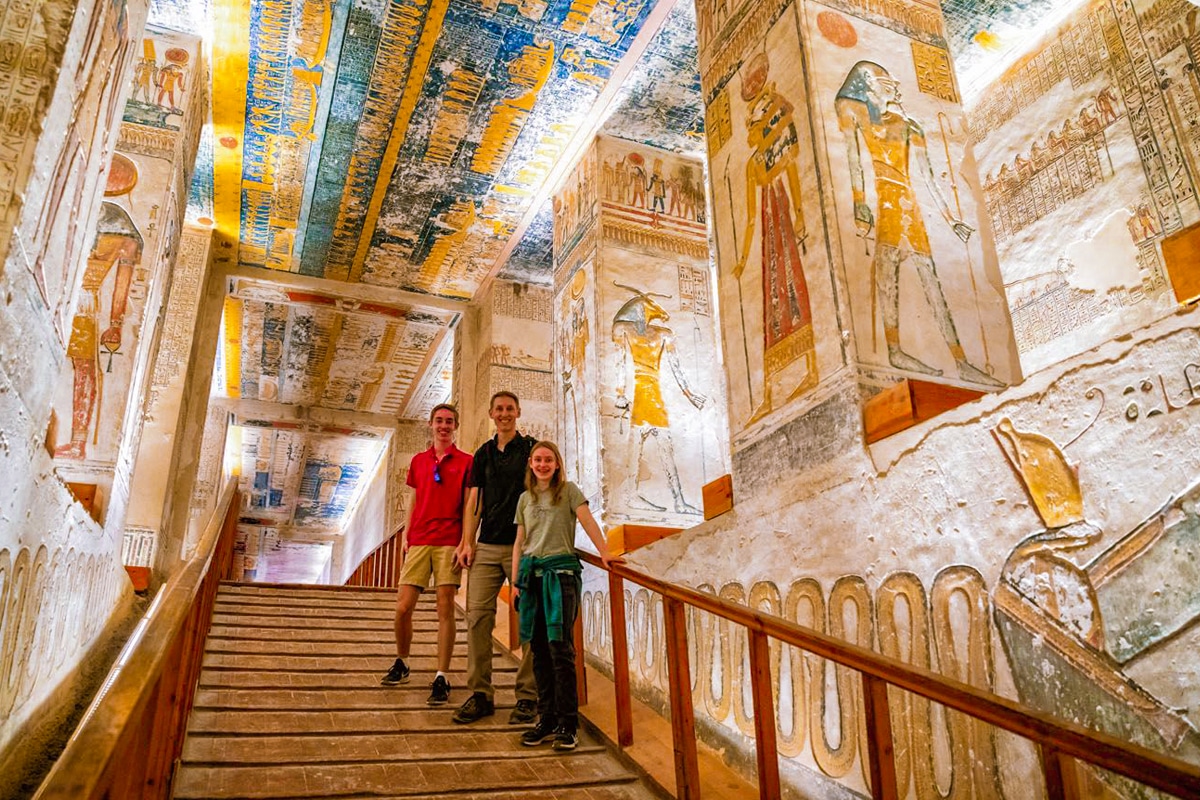
Hidden among the limestone hills on the west bank of the Nile, across from modern Luxor, lies one of the most famous archaeological sites in the world: the Valley of the Kings.
For nearly 500 years, pharaohs, queens, nobles, and the elite of the New Kingdom were buried here. They chose this remote, desert valley to protect their bodies and treasures for eternity. But the valley holds more than mummies and gold. It holds the beliefs, art, and dreams of an entire civilization.
In this complete guide, we will take you inside the tombs, explain the history and architecture, introduce you to the pharaohs buried here, and give you everything you need to plan your visit.
Where Is the Valley of the Kings located?
The Valley of the Kings is located on the west bank of the Nile River, opposite the city of Luxor in Upper Egypt.
The west bank was associated with death because the sun sets there each evening. The ancient Egyptians believed the afterlife was a mirror of the living world, and the west was the gateway to the underworld.
The valley is divided into two main branches:
- East Valley – Where most of the royal tombs are found, including Tutankhamun’s.
- West Valley – Contains fewer tombs, including that of Ay, Tutankhamun’s successor.
To date, 64 tombs and 20 chambers have been discovered here.
A Brief History of the Valley of the Kings
The End of the Pyramids
During the Old Kingdom, pharaohs built massive pyramids to protect their bodies. But pyramids were easy targets for tomb robbers. By the New Kingdom (1550–1070 BC), pharaohs realized they needed a different approach.
Thutmose I, the third pharaoh of the 18th Dynasty, is believed to be the first king to build his tomb in the valley. He wanted his final resting place to be hidden, not visible. His architect, Ineni, carved a tomb deep into the rock and sealed it with rubble.
This set the pattern for the next 500 years.
The Golden Age of Tomb Building
The Ramesside period (19th and 20th Dynasties) was the peak of tomb construction. Pharaohs like Seti I and Ramses II built enormous, richly decorated tombs with multiple corridors, pillared halls, and deep burial chambers.
These tombs were designed not just to hold a body, but to guide the king’s soul through the underworld. Every painting, every hieroglyph, and every amulet had a purpose.
Decline and Abandonment
After the New Kingdom, Egypt entered a period of decline. The Valley of the Kings was largely abandoned. Many tombs were robbed, and the entrances were buried by flash floods and desert sand. The memory of where the tombs were located faded.
For nearly 2,000 years, the valley lay silent.
The Rediscovery of the Valley
European travelers began visiting the valley in the 18th century. Early explorers scratched their names on walls and took whatever they could carry. In the 19th century, men like Giovanni Belzoni excavated tombs with dynamite and crowbars. They found incredible treasures, but also destroyed much of what they found. By 1900, most archaeologists believed the valley had given up all its secrets. They were wrong. In 1922, Howard Carter found the one tomb everyone had missed: the tomb of Tutankhamun.
That discovery changed Egyptology forever.
How Tombs Were Built
Building a royal tomb was a massive undertaking. Teams of workmen lived in a village called Deir el-Medina, just over the hill from the valley.
These workers were not slaves. They were highly skilled artisans, stonecutters, and scribes. They worked in crews—left side and right side—competing to see who could cut rock faster.
A typical tomb took 6 to 8 years to complete. If a pharaoh died early, the tomb was rushed. If he ruled for decades, his tomb grew longer and more elaborate.
The workmen cut into the limestone using copper and bronze chisels. They lit their work with oil lamps. They plastered the rough walls and painted scenes from sacred books like the Amduat and the Book of Gates.
The Design of a Royal Tomb
Although no two tombs are identical, most royal tombs in the Valley of the Kings follow a similar pattern.
The Entrance
A steep staircase or sloping corridor leads down into the hillside. The entrance was usually sealed with heavy stone blocks and plastered to hide it from robbers.
The Corridors
Long passageways lined with religious texts and images. These were meant to help the king navigate the underworld.
The Well Chamber
Some tombs have a deep shaft just inside the entrance. Scholars believe this was either to catch rainwater or to trick robbers. It may also have had symbolic meaning as a “burial” of the god Osiris.
The Pillared Hall
A larger room with columns. Some tombs have multiple pillared halls. This is where funerary equipment was stored.
The Burial Chamber
The most important room. Here, the pharaoh’s sarcophagus was placed. The ceiling was often painted dark blue with gold stars, representing the night sky. The walls show the king in the presence of the gods.
The Treasury
A smaller room attached to the burial chamber, where additional treasures and canopic jars were kept.
The Most Important Tombs to Visit
Not all tombs are open to the public at the same time. Authorities rotate access to preserve the wall paintings. Here are the tombs you should look for.
KV62 – Tutankhamun
The most famous tomb in the valley. It is small and poorly decorated, likely because the king died young. But it is the only royal tomb ever found nearly intact.
What to see:
- The mummy of Tutankhamun in a climate-controlled case
- Wall paintings showing Ay performing the “Opening of the Mouth” ritual
- The quartzite sarcophagus (the golden mummy case is now in the Grand Egyptian Museum)
KV17 – Seti I
Many experts consider this the most beautiful tomb in Egypt. It is the longest and deepest tomb in the valley, stretching over 130 meters. The reliefs are carved in high-quality raised relief, not just painted.
Note: KV17 is currently closed for restoration but may reopen in the future.
KV9 – Ramses V and VI
Also known as the Tomb of Memnon. This tomb has one of the best-preserved ceilings in the valley, featuring astronomical scenes and the Book of the Night. The sarcophagus pit is massive.
KV2 – Ramses IV
One of the most accessible tombs. It has a wide entrance and clear, colorful paintings. The ceiling shows Nut, the sky goddess, swallowing the sun.
KV8 – Merenptah
Son of Ramses II. His tomb is long and has a large granite sarcophagus lid still inside.
KV11 – Ramses III
This tomb is famous for its chapel of the blind harpist and detailed scenes of daily life. It is one of the most visited tombs in the valley.
KV20 – Hatshepsut
One of the first royal tombs in the valley. Hatshepsut, Egypt’s most successful female pharaoh, originally planned a tomb for herself and her father, Thutmose I. It is deep and winding, following the natural crack in the rock.
The Queens and Princes
Not only pharaohs were buried in the valley. Some tombs belonged to:
- Princes (like KV5, the massive tomb of the sons of Ramses II)
- Nobles and officials
- Queens (though most queens of this period are buried in the nearby Valley of the Queens)
Tomb Robbery in Ancient Times
Despite all efforts to hide the tombs, most were robbed within a few hundred years.
Papyrus records from the 20th Dynasty describe trials of tomb robbers. Some were caught with gold and silver from the royal burials. Others confessed under torture.
To save what was left, priests gathered the mummies of famous pharaohs and rewrapped them, hiding them in a single cache. This cache was found in 1881 at Deir el-Bahari, not far from the valley.
Today, the mummies of Ramses II, Seti I, Thutmose III, and others are on display at the National Museum of Egyptian Civilization in Cairo.
The Art and Symbolism of the Tombs
The paintings in the Valley of the Kings are not just decoration. They are magical tools.
Each scene was meant to:
- Protect the king from evil forces
- Provide him with food and drink in the afterlife
- Help him transform into a divine being
- Guide him through the 12 hours of the night
The most common texts found in the tombs are:
- The Amduat – “That Which Is in the Underworld.” Describes the sun god’s journey through the 12 hours of night.
- The Book of Gates – Similar to the Amduat, but the underworld is divided by gates guarded by serpents.
- The Book of the Dead – A collection of spells to help the deceased navigate the afterlife.
- The Litany of Re – Hymns to the sun god.
The Valley of the Kings Today
Preservation Challenges
The Valley of the Kings faces serious threats:
- Flash floods – The valley is prone to sudden rains that can damage tomb interiors.
- Humidity – Visitors bring moisture into the tombs, which causes salt crystals to form on the walls.
- Tourism pressure – Even gentle touching can wear away ancient pigments.
To protect the site, authorities have:
- Installed wooden walkways and glass barriers
- Limited the number of visitors allowed inside certain tombs
- Closed the most fragile tombs for long-term conservation
What to Expect When You Visit
- Tickets are sold at the visitor center. Your ticket allows entry to three tombs (excluding Tutankhamun’s, which requires a separate ticket).
- Photography is not allowed inside the tombs.
- Electric trams take visitors from the center to the tomb entrances.
- There are no restaurants inside the valley, but there is a shaded rest area.
Tips for Visiting the Valley of the Kings
- Go early. The valley opens at 6:00 AM. Arriving early means smaller crowds and cooler temperatures.
- Bring water. There is very little shade, and the desert heat can be intense.
- Wear sturdy shoes. You will walk on gravel, sand, and steep ramps.
- Choose your tombs wisely. Read about the tombs in advance so you know which ones interest you most.
- Hire a guide. A good Egyptologist will bring the stories to life and help you understand the symbols on the walls.
- Be respectful. Do not touch the walls, and do not use flash photography.
Beyond the Valley of the Kings
A visit to the west bank should not stop at the valley. Other nearby sites include:
Deir el-Bahari – Temple of Hatshepsut
This stunning terraced temple is carved into the cliffs. It is dedicated to Amun and to Hatshepsut herself. The reliefs show her divine birth and her famous expedition to the land of Punt.
Deir el-Medina
The village where the tomb builders lived. The houses, tombs, and temples here give us an intimate look at the lives of ordinary workers.
The Colossi of Memnon
Two massive stone statues of Pharaoh Amenhotep III. They once stood at the entrance of his mortuary temple, which was the largest in Egypt. Today, the temple is gone, but the statues remain.
Medinet Habu
The mortuary temple of Ramses III. It is one of the best-preserved temples in Egypt and is rarely crowded.
Frequently Asked Questions
How many tombs are in the Valley of the Kings?
There are 64 known tombs and 20 unfinished chambers in the Valley of the Kings.
Which pharaohs are buried in the Valley of the Kings?
Pharaohs of the New Kingdom, including Tutankhamun, Ramses II, Seti I, Thutmose III, and Hatshepsut, are buried here.
Is the Valley of the Kings worth visiting?
Yes. It is one of the most important archaeological sites in Egypt and a must-see for anyone interested in ancient history.
Can you take photos inside the tombs?
No. Photography is strictly prohibited inside the tombs to protect the ancient wall paintings.
Conclusion
The Valley of the Kings is not just a tourist attraction. It is a sacred landscape, a gallery of ancient art, and a time capsule of human belief.
To walk through these tombs is to follow in the footsteps of pharaohs, priests, and thieves. It is to witness the moment when one of the world’s great civilizations looked death in the face and refused to blink.
Whether you are a first-time visitor or a returning traveler, the valley never fails to inspire awe.
Want to read more.Check Wikipedia article
Plan your journey with Top Nile Cruises and discover the Valley of the Kings for yourself.