
Exploring the Land of Pharaohs: Top Temples to Visit on a Nile Cruise
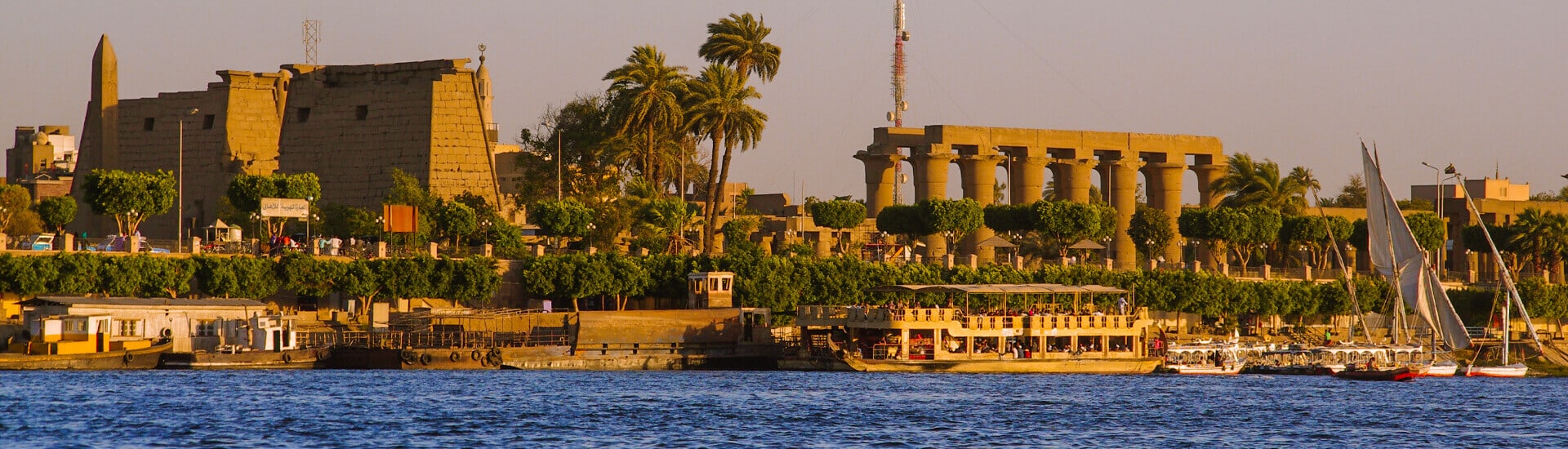
A Nile cruise is more than just a vacation. It is a journey through time.
As your boat glides along the world’s longest river, you will pass green fields, desert hills, and villages that have stood for thousands of years. But the real magic happens when you step ashore. Waiting for you are some of the most magnificent temples ever built by human hands.
These temples were not just places of worship. They were centers of power, learning, and art. They tell the stories of gods and pharaohs, of life and death, of triumph and loss.
In this guide, we will take you to the top temples along the Nile. We will explain their history, show you what to look for, and give you tips to make your visit unforgettable.
Let us begin this journey through the land of the pharaohs.
Why the Nile Is the Heart of Egypt
Before we explore the temples, we must understand the river that made them possible.
The Nile: Egypt’s Lifeline
The Nile River is not just a body of water. It is the reason Egypt exists.
Stretching over 6,650 kilometers (4,130 miles), it is the longest river in the world. It flows from central Africa, through the deserts of Sudan and Egypt, and finally empties into the Mediterranean Sea.
Without the Nile, Egypt would be nothing but sand. The river brings water to an otherwise dry land. Every year, ancient Egyptians waited for the annual flood, which deposited rich, black soil onto the fields. This soil allowed them to grow wheat, barley, and flax. It fed the people and made Egypt the breadbasket of the ancient world.
A River of Gods and Kings
The Egyptians did not just use the Nile—they worshipped it. They called it Hapi, the god of the flood. They believed the river was a gift from the gods, a pathway between the world of the living and the world of the dead.
This is why so many temples were built along its banks. The Nile was a sacred highway. Processions of boats carried statues of the gods from one temple to another. The river connected the great cities of Thebes (Luxor), Memphis, and Aswan.
When you sail the Nile today, you are following the same route taken by pharaohs and priests thousands of years ago.
Temple of Karnak: The Largest Religious Complex in the World
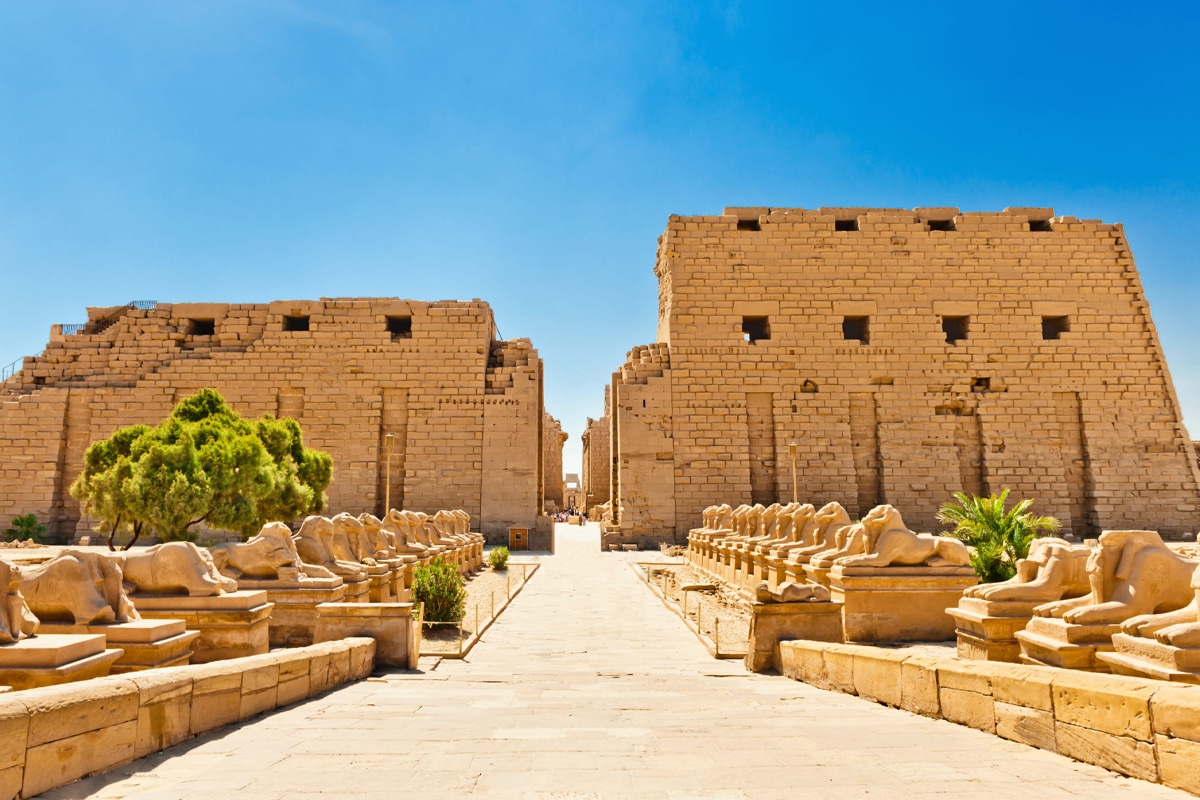
No visit to Egypt is complete without seeing Karnak. It is not just one temple—it is a city of temples, built over 2,000 years.
A Brief History of Karnak
Construction at Karnak began around 2000 BC during the Middle Kingdom. But most of what you see today was built by the pharaohs of the New Kingdom (1550–1070 BC).
Each new ruler wanted to leave their mark. They added pylons, courtyards, halls, and obelisks. The result is a sprawling complex that covers more than 100 hectares (247 acres). It is the largest religious site ever built.
Karnak was dedicated to Amun-Re, the king of the gods. But it also honored his wife, Mut, and their son, Khonsu, the moon god. Together, they formed the Theban triad.
What to See at Karnak
The Great Hypostyle Hall
This is the most famous part of Karnak. Imagine 134 massive columns arranged in 16 rows. The tallest columns are 21 meters (69 feet) high. They are so large that 10 people standing with arms outstretched cannot circle them.
The columns were once painted in bright colors. Traces of red, blue, and green can still be seen. The stone “roof” above your head represents the primeval swamp from which life emerged, according to Egyptian myth.
The Sacred Lake
This large, rectangular pool was used by priests for purification rituals. It was also the home of geese that were considered sacred to Amun. The lake is still fed by groundwater from the Nile.
The Obelisks
Karnak once had many obelisks. Only a few remain. The tallest standing obelisk was built by Queen Hatshepsut, Egypt’s most successful female pharaoh. It stands 29 meters (97 feet) tall and is made from a single piece of pink granite.
The Avenue of Sphinxes
A road lined with ram-headed sphinxes once connected Karnak to Luxor Temple, about 3 kilometers away. These sphinxes represent Amun, protecting the pharaoh on his journey.
Tips for Visiting Karnak
- Go early. Karnak opens at 6:00 AM. Early morning light is beautiful, and crowds are smaller.
- Wear comfortable shoes. You will walk several kilometers.
- Hire a guide. A good guide will explain the symbols and stories carved on the walls.
- Bring water. It gets hot, even in winter.
Temple of Luxor: Beauty by Day, Magic by Night
The Temple of Luxor sits in the heart of the modern city. Unlike Karnak, which grew over centuries, Luxor Temple was built mainly by two pharaohs: Amenhotep III and Ramses II.
The Purpose of Luxor Temple
Luxor Temple was not a burial place or a mortuary temple. It was dedicated to the rebirth of kingship. Every year, during the Opet Festival, statues of Amun, Mut, and Khonsu were carried in a grand procession from Karnak to Luxor. The ritual reaffirmed the pharaoh’s divine right to rule.
Highlights of Luxor Temple
The First Pylon and Colossi of Ramses II
The entrance is dominated by a massive pylon (gateway) built by Ramses II. In front of it stand two seated statues of the pharaoh and two standing figures. Originally, there were six statues and two obelisks. One obelisk now stands in Paris, on the Place de la Concorde.
The Courtyard of Ramses II
Inside the pylon, you enter a large courtyard surrounded by double rows of columns. The walls show scenes of Ramses offering gifts to the gods.
The Colonnade of Amenhotep III
This is one of the most beautiful spaces in Egypt. Fourteen towering columns, arranged in two rows, lead to the inner temple. The walls once showed scenes from the Opet Festival. Many of the carvings were later covered by a layer of plaster, on which early Christians painted scenes from the Bible.
The Birth Room
A small chamber on the east side shows the divine birth of Amenhotep III. The scenes claim that his true father was the god Amun, who visited his mother in the form of her husband. This was a common way to legitimize a pharaoh’s rule.
Visiting Luxor Temple at Night
Luxor Temple is one of the few sites in Egypt that is beautifully lit after dark. The combination of floodlights, shadows, and ancient stone creates a magical atmosphere. If you visit in the evening, you will see the temple in a completely different light.
Abu Simbel : The Temple That Moved
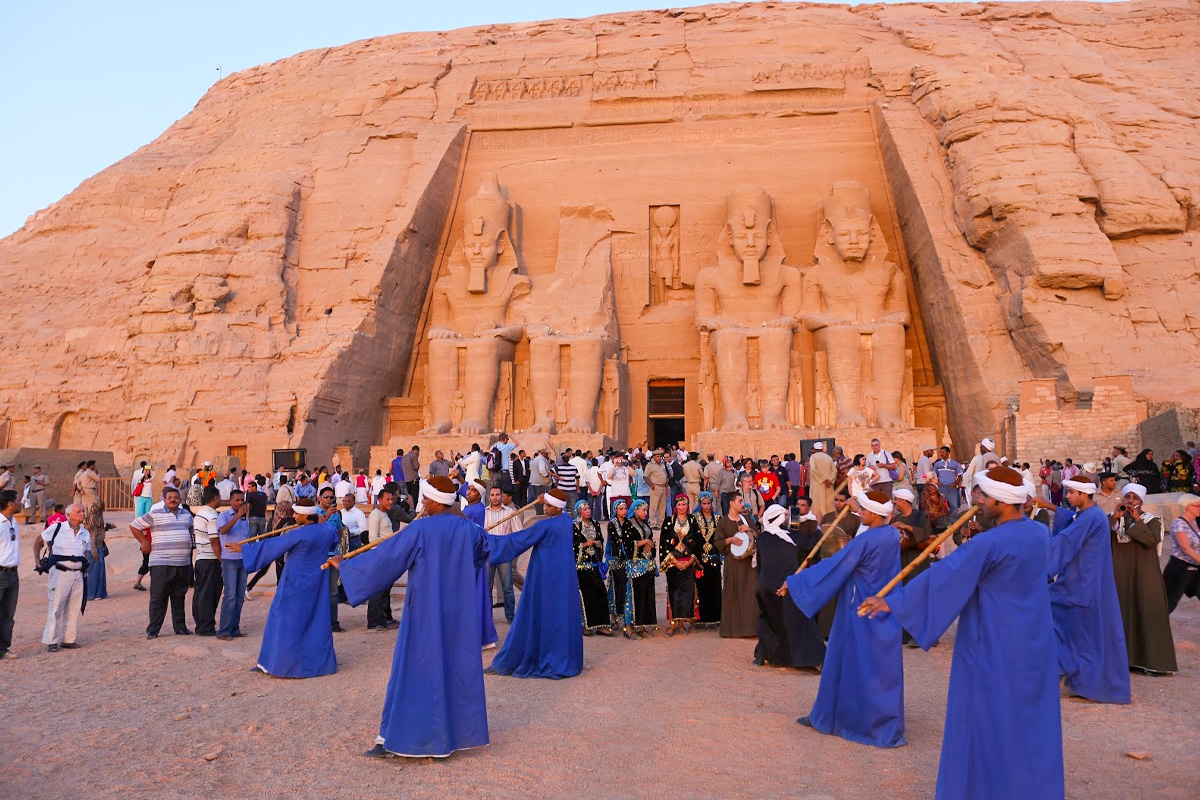
The Abu Simbel temples are located far south, near the border with Sudan. They are not on the main Nile cruise route, but many cruises offer an optional excursion by bus or plane.
The Story of Relocation
In the 1960s, the Egyptian government built the Aswan High Dam. The resulting lake, Lake Nasser, would have submerged Abu Simbel forever.
UNESCO launched an international campaign to save the temples. Between 1964 and 1968, workers cut the temples into massive blocks, moved them to higher ground, and reassembled them exactly as they were. It was one of the greatest engineering feats in history.
The Great Temple of Ramses II
The Great Temple is dedicated to Ramses II and the gods Amun, Re-Horakhty, and Ptah. The facade is carved directly into the rock. Four colossal statues of Ramses, each 20 meters (65 feet) tall, guard the entrance.
Inside, the temple stretches back 55 meters (180 feet). The walls are covered with scenes of Ramses’ military victories, including the famous Battle of Kadesh.
Twice a year, on February 22 and October 22, the sun aligns perfectly to illuminate the statues of the gods in the inner sanctuary. The statue of Ptah, god of darkness, remains in shadow.
The Small Temple of Nefertari
Next to the Great Temple is a smaller temple dedicated to Queen Nefertari, Ramses’ favorite wife. The facade shows six standing figures: four of Ramses and two of Nefertari. It is one of the few temples in Egypt where the queen is shown the same size as the king.
How to Visit Abu Simbel
Most visitors reach Abu Simbel by:
- Road – A 3-hour drive from Aswan through the desert. Convoys leave early in the morning.
- Air – Flights from Aswan or Cairo land at Abu Simbel Airport.
If you visit during the Sun Festival, book months in advance.
Philae Temple: The Jewel of the Nile
The Temple of Philae was dedicated to Isis, the goddess of magic, motherhood, and healing. It was one of the last places where ancient Egyptian religion was practiced, surviving until the 6th century AD.
The Relocation of Philae
Like Abu Simbel, Philae was threatened by the Aswan High Dam. But unlike Abu Simbel, Philae was not carved into a cliff. It stood on an island that would be completely submerged.
A multinational team dismantled the temple block by block and rebuilt it on the nearby Agilkia Island, which was landscaped to match the original site.
The Main Temple of Isis
The main temple is beautifully preserved. The first pylon shows Ptolemy XII (father of Cleopatra) smiting his enemies before Isis, Horus, and Hathor.
Inside, you will find chambers decorated with scenes of offerings and rituals. The sanctuary still contains the granite pedestal that once held the cult statue of Isis.
The Kiosk of Trajan
This small, open structure is one of the most photographed spots in Egypt. Fourteen columns with floral capitals support a roof that once provided shade for Roman Emperor Trajan. It stands at the water’s edge, reflecting in the Nile.
The Sound and Light Show
Every evening, Philae comes alive with a Sound and Light Show. Stories of Isis and Osiris are told as colored lights wash over the temple. It is a peaceful and moving experience.
Edfu Temple: The Best-Preserved Temple in Egypt
The Temple of Horus at Edfu is the most completely preserved temple in Egypt. It was built during the Ptolemaic period, between 237 and 57 BC, on the site of an earlier temple.
Dedicated to Horus
Edfu was dedicated to Horus, the falcon-headed god, son of Isis and Osiris. Horus was the protector of the pharaoh and the god of the sky.
What Makes Edfu Special
Because it was built late, Edfu shows us what an ancient Egyptian temple looked like in its final form. Every part is intact:
- The massive pylon with reliefs of Ptolemy XII smiting enemies
- The open court surrounded by columns
- The hypostyle hall with its dark, mysterious atmosphere
- The sanctuary where the god’s statue once stood
On the walls, you can see the Dramatic Text, a long inscription describing the battle between Horus and Seth.
Visiting Edfu
Most Nile cruises stop at Edfu. The temple is a short walk or horse-drawn carriage ride from the dock.
Kom Ombo: The Double Temple
The Temple of Kom Ombo is unique. It is a double temple, built for two gods: Sobek, the crocodile god, and Horus the Elder, the falcon god.
Two Temples in One
Everything in Kom Ombo is doubled. There are two entrances, two courts, two hypostyle halls, and two sanctuaries. The left side belongs to Horus; the right side belongs to Sobek.
The symmetry reflects the balance of opposites in Egyptian thought: order and chaos, light and dark, life and death.
The Crocodile Museum
Near the temple, a small museum displays mummified crocodiles found in the area. These animals were sacred to Sobek and were buried with the same care as humans.
Medical Reliefs
One of the most interesting parts of Kom Ombo is a set of reliefs showing medical and surgical instruments. Scalpels, forceps, and other tools are carved in stone, giving us a glimpse into ancient medicine.
Other Temples Worth Visiting
Dendera Temple
Located north of Luxor, the Temple of Hathor at Dendera is one of the best-preserved temples in Egypt. The ceiling of the hypostyle hall features a famous zodiac (now in the Louvre). The crypts are open to visitors and are covered in reliefs.
Abydos Temple
Further north, the Temple of Seti I at Abydos is known for its beautiful reliefs and the Abydos King List, a carved list of 76 pharaohs. It is a long day trip from Luxor, but well worth it.
Esna Temple
Located in the town of Esna, this temple is still being excavated. The hypostyle hall is visible in a deep pit (the rest of the temple is buried under modern buildings). The columns have some of the most colorful capitals in Egypt.
Practical Tips for Temples to Visit on a Nile Cruise
Planning Your Cruise
Most Nile cruises last 3, 4, or 7 nights between Luxor and Aswan. Longer cruises include more temples and more time at each site.
When choosing a cruise, consider:
- Which temples are included – Some cruises stop at all the major sites; others skip some.
- The quality of the guide – A knowledgeable guide makes all the difference.
- The size of the boat – Smaller boats offer a more intimate experience.
What to Wear
- Light, breathable clothing – Cotton or linen is best.
- Modest attire – Cover shoulders and knees out of respect.
- Comfortable shoes – You will walk on sand, stone, and uneven ground.
- Hat and sunglasses – The sun is intense, even in winter.
Photography Tips
- Check the rules – Some temples do not allow photography inside.
- No flash – Flash damages ancient paintings.
- Go early or late – The light is softer, and the crowds are thinner.
- Look for details – Close-ups of carvings and hieroglyphs make great photos.
Staying Safe and Comfortable
- Drink plenty of water – Dehydration is a real risk.
- Use sunscreen – Reapply often.
- Listen to your guide – They know the site and the safest routes.
- Respect the site – Do not touch the walls or climb on the stones.
Frequently Asked Questions
What are the must-see temples on a Nile cruise?
The essential temples are Karnak, Luxor, Valley of the Kings, Hatshepsut Temple, Edfu, Kom Ombo, and Philae. Abu Simbel is an optional but highly recommended add-on.
How long is a typical Nile cruise?
Most Nile cruises are 4 days and 3 nights or 5 days and 4 nights between Luxor and Aswan.
What is the best time for a Nile cruise?
The best time is October to April, when temperatures are mild and comfortable for sightseeing.
Is Abu Simbel included in a Nile cruise?
Abu Simbel is usually an optional excursion, not included in the standard cruise package. You can book it as an add-on from Aswan.
Conclusion: A Journey Through Time
A Nile cruise is more than a vacation. It is a pilgrimage to the sources of human civilization.
The temples you visit are not just old buildings. They are books carved in stone. They tell us how the Egyptians saw the world, how they worshipped their gods, and how they prepared for eternity.
From the colossal columns of Karnak to the quiet magic of Philae by moonlight, each temple has its own voice. Listening to them is the adventure of a lifetime.
Check Our Top Nile Cruise Trips:-
Book your Nile cruise with Top Nile Cruises and follow the path of the pharaohs.